
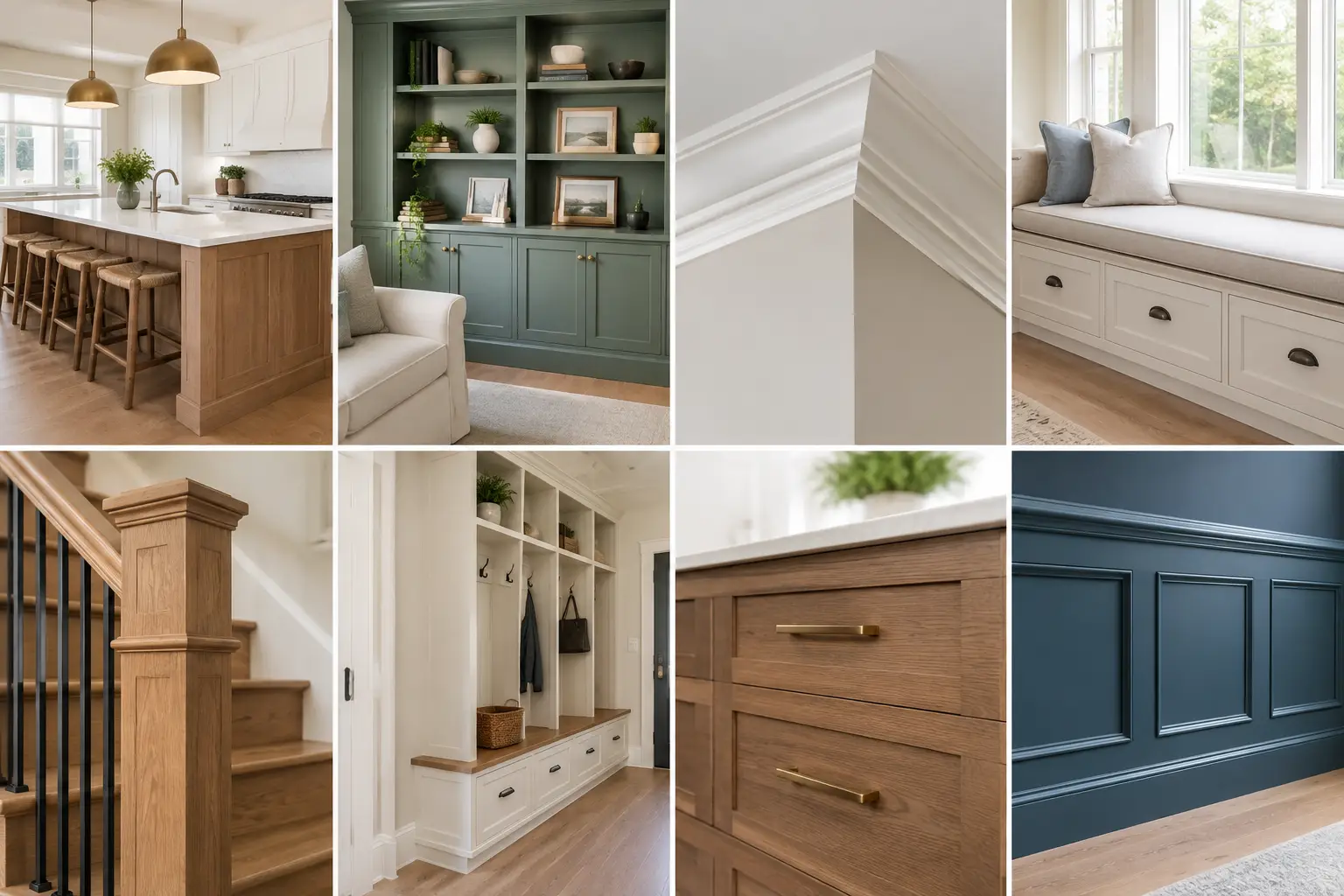
A room can have beautiful finishes and still feel unfinished when storage is generic, proportions are off, or everyday items have nowhere sensible to go. The best millwork examples solve those quiet frustrations while giving the home a more considered, lasting character. They are not simply cabinets placed against a wall. They are built-in elements designed around the architecture, the people using the space, and the details that make daily routines easier.
For homeowners planning a renovation or new build, millwork is often where the project becomes personal. A pantry can be organized around how your family cooks. A mudroom can contain the winter gear that once collected by the door. A living room wall can hold media, books, and lighting without looking crowded. The following examples show how custom millwork brings function and finish together.
What Counts as Millwork?
Millwork refers to custom-made interior woodwork, including cabinetry, built-ins, wall paneling, closets, stair components, and decorative trim. In a residential project, it often includes the pieces that make a room feel integrated rather than furnished one item at a time.
The difference is largely in the level of tailoring. A ready-made cabinet may fill a basic opening. Custom millwork can account for an uneven wall, a low window, an existing beam, a preferred door profile, and the exact items that need to be stored. It can also carry a consistent finish, material, and proportion from one room to the next.
Millwork Examples for the Kitchen
1. A fully custom kitchen perimeter
Kitchen cabinetry is one of the most familiar millwork examples, but the best work goes well beyond standard upper and lower cabinets. A custom perimeter may include full-height storage, furniture-style ends, carefully sized drawers, and a built-in appliance wall that keeps the room calm and organized.
Door style matters, but interior planning matters just as much. Deep drawers for pots are generally more useful than a cavernous base cabinet. Vertical dividers can keep baking sheets accessible. A narrow pullout beside the range can provide a logical home for oils and spices. These are small decisions with a daily payoff.
2. A statement island with working storage
An island is often the visual center of a kitchen, yet it must earn its footprint. A maple island with a painted perimeter, for example, can add warmth and contrast while housing recycling, cookware, seating, or a microwave drawer.
The trade-off is circulation. A larger island offers more storage and preparation space, but it can make a kitchen feel tight if aisles are compromised. A thoughtful design begins with how people move through the room, not with a wish list of features.
3. A walk-in or cabinet pantry
A pantry is one of the clearest examples of millwork improving daily life. Open shelves, adjustable sections, countertop appliance storage, pullout baskets, and shallow door racks can turn a crowded food cupboard into a space that is easy to use and easy to maintain.
For a walk-in pantry, cabinetry does not always need to cover every wall. Open shelving can be practical and cost-conscious when neatly finished. For a pantry visible from the kitchen, closed cabinetry may create a quieter appearance. The right approach depends on whether convenience, display, or visual simplicity is the higher priority.
4. A built-in banquette or coffee station
A window-seat banquette can create useful seating in a kitchen or breakfast area while concealing seasonal linens, board games, or serving pieces below. The cushion, back profile, and surrounding cabinetry can be designed to suit the room rather than forcing a freestanding bench into place.
A coffee station offers another focused use of kitchen millwork. Pocket doors can hide the equipment when not in use, while interior lighting and a dedicated drawer for filters, mugs, and supplies keep the counter from becoming a catchall.
Custom Millwork Examples Beyond the Kitchen
5. A hardworking mudroom
A mudroom has to withstand real life. Individual lockers, benches, upper cabinets, and durable hooks give coats, backpacks, footwear, and sports equipment a defined home. Custom sizing is especially useful here because family routines are rarely one-size-fits-all.
A well-planned mudroom may include tall compartments for brooms or hockey sticks, ventilated shoe storage, and drawers for gloves and pet supplies. Painted millwork is common in this space, but a durable finish and easy-to-clean details matter more than selecting a fashionable color alone.
6. A bathroom vanity that fits the room
A custom vanity can make a compact bathroom feel more generous. Drawers built around plumbing provide better access than a deep, empty cabinet, and a tailored width can eliminate awkward filler spaces beside a wall or shower.
Material selection deserves care. Natural wood veneers and solid wood details bring warmth, but bathrooms experience moisture and temperature shifts. A properly prepared and finished cabinet, sensible ventilation, and careful detailing around sinks are part of building a vanity that holds up over time.
7. A primary closet designed around habits
Closet millwork should begin with a practical question: what is actually being stored? Long hanging, folded clothes, shoes, handbags, laundry, and accessories all need different types of space. A balanced closet includes enough hanging room, but it also avoids wasting vertical space that could serve drawers or adjustable shelves.
Some homeowners prefer open shelving for visibility. Others want doors to create a more refined, uncluttered look. Neither is automatically better. Open systems are easy to access, while closed cabinetry reduces visual noise and protects contents from dust.
8. A living room media wall
A media wall can turn a difficult blank wall into an architectural feature. It may combine lower cabinets, open display shelving, concealed wire management, integrated lighting, and a centered television or fireplace surround.
The strongest designs avoid treating every inch as storage. A mix of closed cabinets and open space gives the composition room to breathe. In a traditional home, framed doors and crown detail may suit the architecture. In a more contemporary setting, flat panels, walnut accents, or a restrained painted finish can feel more appropriate.
9. A home office built for focused work
A dedicated office does not need to resemble a corporate workstation. Custom millwork can include a desk at the right height, file storage, printer space, bookcases, and a concealed charging area. In a shared family room or spare bedroom, it can also be designed to close away at the end of the day.
Good office cabinetry plans for technology without letting technology dominate the room. Grommets, accessible outlets, ventilation where needed, and a sensible path for cables should be resolved before installation.
10. A basement bar or entertaining area
Basement millwork often has a different role than kitchen cabinetry. It may need to support movie nights, guests, games, or a compact beverage area. A bar with durable cabinetry, glass storage, a beverage refrigerator opening, and a serving counter can make the space feel intentional rather than temporary.
Because basements can have lower ceilings, soffits, and utility constraints, custom sizing is valuable. The goal is not to crowd the room with cabinets, but to make use of the available wall space while preserving a comfortable place to gather.
11. Wall paneling and architectural storage
Millwork does not always need to look like cabinetry. Wall paneling, wainscoting, coffered ceilings, and integrated window seats can add depth and definition to a room. When combined with concealed storage, these details provide function without making the room feel overly built-in.
This kind of work calls for proportion. Heavy paneling can overwhelm a small room, while overly narrow trim can disappear in a large one. The scale should relate to ceiling height, window placement, and the age and style of the home.
12. Finished stairs and railings
Stair and railing finishing can be the connecting detail that ties an entry or upper level together. A stained handrail, carefully finished newel posts, painted stringers, or matching trim can complement nearby cabinetry and flooring.
The visual result is important, but durability is equally important in a high-touch area. Finish selection, surface preparation, and the quality of installation all affect how the work wears over the years.
How to Choose the Right Millwork for Your Home
Start with the problems you want the room to solve. Bring inspiration images, measurements if available, and an honest account of what is not working now. Is storage insufficient? Does the room lack a focal point? Are daily items always visible because they have no assigned place? Clear answers lead to better design decisions than choosing a door style first.
Then consider the home as a whole. A walnut built-in, sculpted painted doors, or simple slab-front cabinetry can all be beautiful, but they should relate to the home’s architecture and surrounding finishes. Finish matching is particularly important when new millwork sits beside existing floors, stair details, or furniture that will remain.
The most valuable millwork is rarely the flashiest feature in the room. It is the pantry that keeps cooking supplies within reach, the vanity drawer that finally holds the essentials, or the built-in that gives a family room a sense of order. When it is thoughtfully designed, carefully manufactured, and personally installed, custom millwork quietly makes a home easier to live in for years to come.