
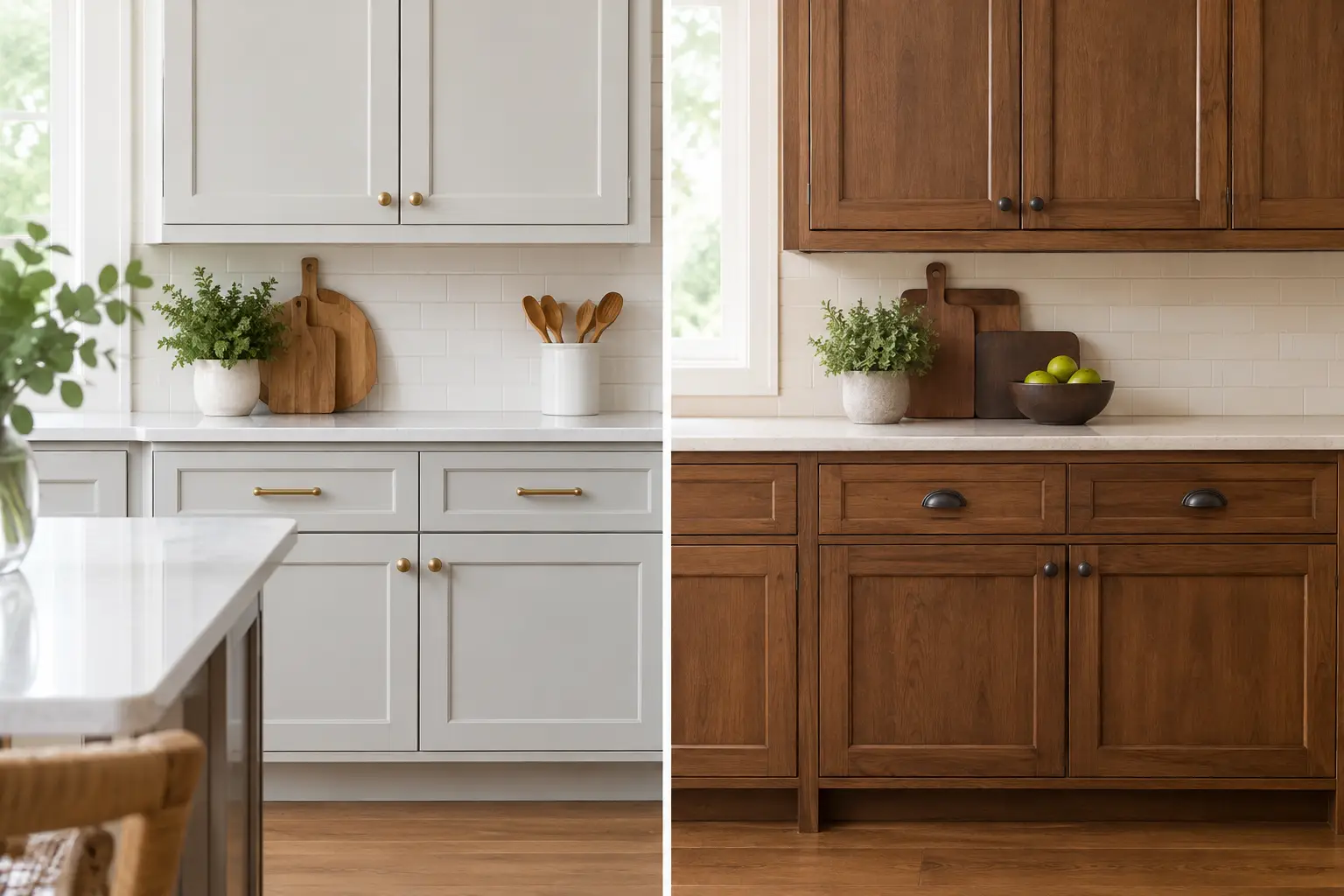
A cabinet door sample can look very different once it becomes forty doors, a tall pantry, an island, and the backdrop to the busiest room in your home. The decision between painted versus stained cabinetry is not simply about choosing a color. It shapes how the room reflects light, how much natural wood character is visible, how the finish will age, and how the cabinetry relates to the rest of the home.
For a custom kitchen or whole-home millwork project, the better choice is the one that supports both the architecture and the way your family lives. A crisp painted perimeter with a warm wood island may be exactly right in one home. In another, stained white oak throughout creates the calm, continuous backdrop the space needs. The details matter.
Painted Versus Stained Cabinetry: The Visual Difference
Painted cabinetry covers the wood substrate with a solid, opaque finish. It gives homeowners the broadest range of color choices, from soft warm whites and muted greens to charcoal, navy, or a carefully matched accent tone. Because the grain is concealed, the eye is drawn to the cabinet profile, door style, hardware, and proportions rather than to the wood itself.
This makes paint especially effective when a kitchen needs a tailored architectural look. A painted shaker door can feel classic and restrained. The same finish on a slim-profile door can feel more contemporary. Painted cabinetry also works well when a homeowner wants a finish that connects kitchen cabinetry to trim, wall color, or a painted built-in elsewhere in the home.
Stained cabinetry does the opposite. It allows the grain, figure, and natural variation of the wood to remain part of the design. The species matters greatly. White oak offers linear grain and a composed, textural appearance. Maple is smoother and more subtle. Walnut brings deeper color and stronger movement, while rift-cut oak provides a more consistent, refined grain pattern than plain-sawn material.
A stain can shift the color of a species, but it does not erase its personality. That is one reason stained cabinetry feels so considered when the right wood is selected. Each door and panel remains part of a larger composition, with variation that gives the room depth rather than visual flatness.
When Painted Cabinetry Makes Sense
Paint is often the right choice for homeowners who want a specific color, a lighter visual footprint, or a kitchen that feels especially clean and tailored. In rooms with limited natural light, an off-white, cream, or pale greige finish can help cabinetry recede visually and brighten the room without making it feel stark.
It is also a practical choice when cabinetry needs to coordinate with existing elements that are not wood-forward. A painted bathroom vanity may sit more comfortably beside patterned tile and polished fixtures. A painted mudroom can carry a family-friendly color while allowing the bench, hooks, and storage configuration to do the hard work.
The cabinet construction and finishing process matter as much as the paint color. Painted doors and drawer fronts need stable materials, careful surface preparation, and a controlled finishing process to achieve an even, durable finish. A good finish should feel smooth, consistent, and properly built up at edges and profiles, not thin or chalky.
There is one honest trade-off: paint can reveal movement at joints over time, particularly where solid wood components expand and contract with seasonal humidity. This does not mean painted cabinetry is poorly made. It is a natural characteristic of wood construction, and it should be understood before choosing the finish. Thoughtful material selection and proper finishing help manage this reality, but no quality craftsperson should promise that a painted wood door will never show a fine line at a joint.
Painted surfaces can also show chips or scuffs more readily in high-contact areas, depending on the color. Dark paint can highlight dust and light scratches; bright white can show marks around pulls and lower drawers. Most minor damage can be touched up, but an exact invisible repair may require more than a small brush application. Keeping a properly labeled touch-up kit from the original finishing process is worthwhile.
When Stained Cabinetry Is the Better Fit
Stained cabinetry is a strong choice when the warmth and character of real wood are central to the room. It suits homes with natural flooring, exposed beams, stone, plaster walls, or architectural details that benefit from a material-rich palette. It can also bring warmth to a newer home that might otherwise feel overly smooth or uniform.
A stained finish is not limited to traditional kitchens. Natural white oak with a low-sheen finish can feel clean and current. A medium-toned maple can feel timeless and quiet. Walnut cabinetry, used for a library wall, vanity, or island, brings a tailored sense of permanence without needing elaborate door detailing.
Because wood grain remains visible, stained cabinetry tends to disguise small nicks and everyday wear more gracefully than a uniform painted surface. A minor mark often reads as part of the natural material rather than as a sharp contrast in a solid color. That can make stain especially appealing for busy islands, mudroom benches, and lower cabinetry used by children and pets.
The trade-off is variation. No two boards accept stain in exactly the same way, even within one species. Grain density, mineral streaks, and board-to-board color shifts are part of what makes wood genuine. Homeowners who want every door to look identical may be happier with paint. Those who appreciate natural material will usually see that variation as one of the finish’s strengths.
Stained cabinetry also asks for careful coordination. Wood undertones can compete with flooring, existing furniture, or wall color if decisions are made from a small sample alone. A sample should be viewed next to the countertop, backsplash, floor, and hardware, in the actual room light whenever possible. Morning light, evening light, and under-cabinet lighting can all change how a stain reads.
Consider the Cabinetry’s Job, Not Just Its Style
The most successful projects often use both finishes with purpose. A painted perimeter can keep a kitchen light and open, while a stained island creates a focal point and adds warmth at the center of the room. Stained floating shelves can echo a wood range hood detail. A painted pantry wall can blend into the room while a walnut beverage station feels distinct and intentional.
This approach works beyond the kitchen. A bathroom might pair a painted vanity with a wood-framed mirror or linen tower. In a home office, painted built-ins can keep the walls visually quiet while a stained desktop provides a warmer work surface. In a mudroom, a durable painted storage wall may be balanced by a stained bench top that welcomes the wear of daily use.
The key is restraint. Combining finishes should create hierarchy, not competition. Usually, one finish should lead and the other should support it. Repeating the wood tone in a small detail, such as open shelving, a hood accent, or a built-in desk, helps the design feel connected.
Durability, Care, and Future Changes
Both painted and stained cabinetry can be built to last when quality materials, joinery, finishing, and installation are handled with care. Daily maintenance is straightforward: wipe spills promptly with a soft damp cloth and mild soap when needed, then dry the surface. Avoid abrasive pads, harsh degreasers, and cleaners that leave heavy residue.
Neither finish is maintenance-free in the sense of being immune to life. Cabinetry near the dishwasher, sink, trash pullout, and cooktop sees more moisture, heat, and contact than other areas. Good design considers these zones from the start, including durable construction, sensible clearances, and hardware that supports daily use.
Future flexibility is another point to weigh. Painted cabinetry can be refinished in a new color more readily when tastes change, although a quality repainting project is still substantial work. Stained cabinetry can sometimes be refreshed or adjusted, but changing a deep wood tone to a very light one is more involved and may not produce the same result as starting with a different species and finish.
Start With the Feeling You Want to Live With
Before settling on a finish, consider what you want to notice when you walk into the room. Do you want the cabinetry to feel crisp, quiet, and color-led? Or do you want to see the grain, texture, and warmth of wood every day? Then consider the practical questions: the room’s light, your household’s pace, the finishes already in place, and how long you expect the design to serve your home.
At FehrCo, finish decisions are treated as part of the full cabinetry design, not a final color selection. Door profiles, wood species, lighting, countertops, storage needs, and the home’s existing details all deserve a place in the conversation. The right sample is helpful, but the right finish is the one that still feels considered once the cabinetry is built, installed, and put to work.