
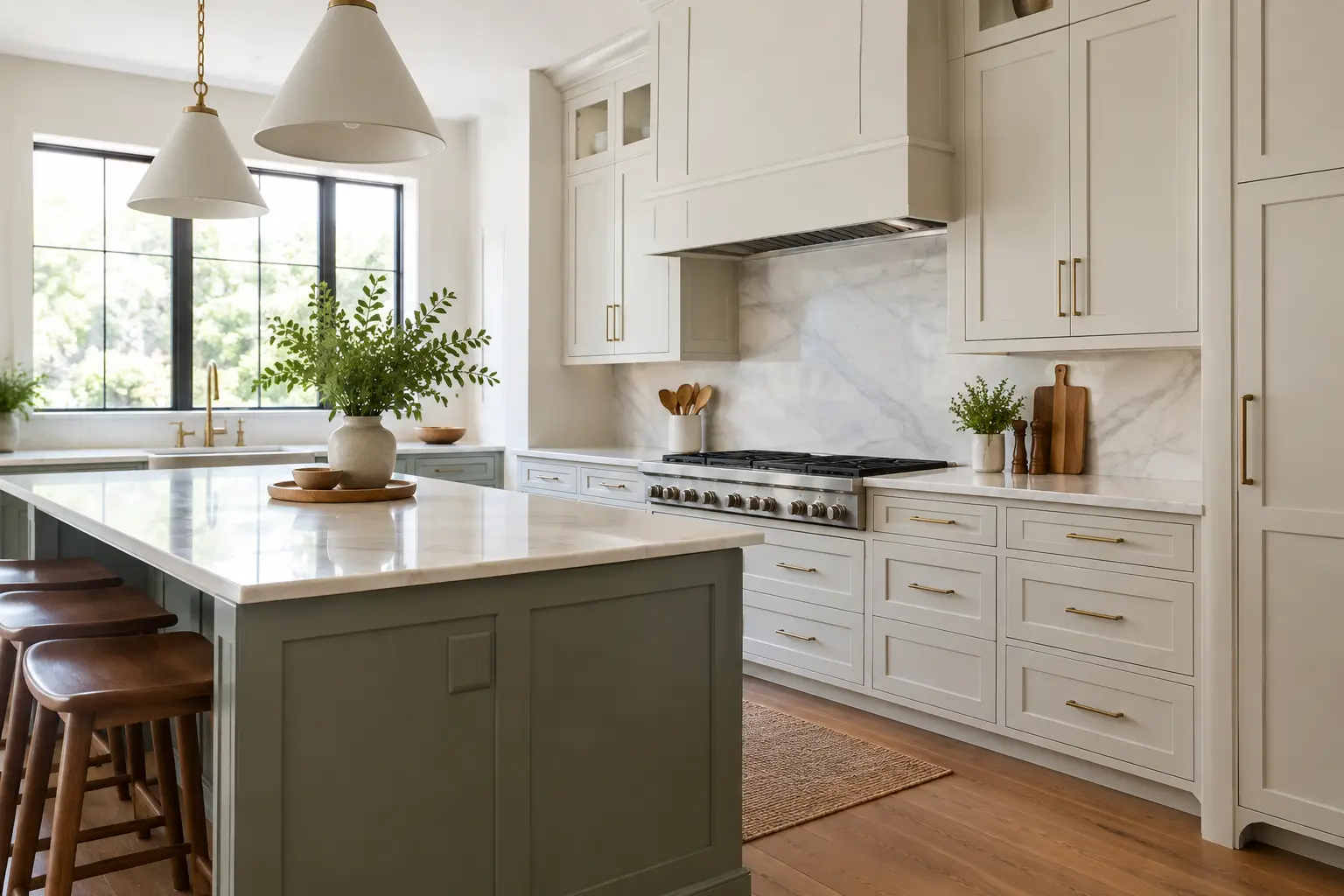
A cabinet door that sits perfectly within its frame changes the whole feel of a kitchen. The reveal lines are narrow and consistent, the face frame becomes part of the design, and every drawer closes with a satisfying sense of precision. But are inset cabinets worth it when they require more skilled construction, more installation time, and a larger share of the renovation budget? For the right home and homeowner, absolutely. The key is knowing what you are paying for and whether the style supports the way you live.
What Makes Inset Cabinets Different?
Inset cabinetry is built so doors and drawer fronts sit inside the cabinet face frame rather than resting over it. When closed, the front of the door is nearly flush with the frame. A small, even gap – called a reveal – surrounds each door and drawer.
This is different from overlay cabinetry, where the doors and drawer fronts cover part or nearly all of the cabinet frame. Full-overlay doors create a clean, contemporary plane across the cabinet fronts. Inset doors reveal more of the frame and create a more furniture-like appearance.
Neither construction method is automatically better. The difference is visual, structural, and practical. Inset work calls for very accurate boxes, stable materials, careful finishing, and patient installation. A door that is off by even a small amount can make an otherwise beautiful kitchen look uneven. That precision is a major part of its cost.
Are Inset Cabinets Worth It for the Look?
If your vision includes tailored detail, inset cabinets can be one of the most meaningful design decisions in the room. They suit traditional, transitional, Shaker, English-inspired, and heritage-style homes particularly well. They can also feel unexpectedly current when paired with a simple slab door, a restrained paint color, and clean hardware.
The appeal is not simply that inset cabinetry looks formal. It looks intentional. Framed openings give each cabinet front definition, while the narrow reveals create rhythm across a long wall of storage. A painted inset kitchen with a warm maple island, for example, can feel refined without becoming ornate. In a pantry or mudroom, the same construction can make hardworking storage feel integrated with the architecture rather than added after the fact.
Inset cabinets also allow details to stand out quietly. A sculpted door profile, a beaded frame, visible hinges, or a hand-selected brass knob has more presence when it sits within a carefully proportioned face frame. If those details matter to you, inset construction gives them a strong foundation.
That said, full-overlay cabinetry may be the better choice for a very minimal kitchen. It provides a broader, less interrupted door surface and can make a small room feel visually calmer. A design should not be pushed toward inset simply because it is considered premium. The cabinetry needs to belong in the house and support the overall finish palette, flooring, trim, and hardware.
The Cost Is About Precision, Not Just Style
Inset cabinetry is typically more expensive than overlay cabinetry, and the reason goes well beyond the door style. The cabinet boxes must be made accurately, with square openings and durable face frames. Doors and drawer fronts must be sized and fitted individually. Hinges need careful adjustment, and the installer must account for walls, floors, and ceilings that may not be perfectly straight.
Finishing adds another layer of care. Paint builds thickness, wood responds to humidity, and doors need enough clearance to operate properly through seasonal changes. A quality shop plans for these realities rather than forcing doors into overly tight openings that may rub later.
Installation is equally important. A beautifully made inset cabinet can still disappoint if it is installed against uneven walls without proper scribing, shimming, and final adjustment. This is why inset work is best treated as a complete cabinetry project, from design and manufacturing through finishing and installation, rather than a set of boxes ordered to fit a plan.
The additional investment often makes the most sense in a long-term home, a custom build, or a renovation where cabinetry is central to the value and character of the space. It may be harder to justify in a short-term update where layout, appliances, flooring, and counters are all being selected mainly for speed or budget control.
Function Matters More Than the Door Style
A common misconception is that inset cabinets are less functional. In reality, well-designed inset cabinetry can include deep drawers, pullout pantry storage, spice organizers, tray dividers, waste and recycling centers, appliance garages, and integrated lighting. The door construction does not determine whether a kitchen works well. Thoughtful planning does.
There are, however, a few practical considerations. Because inset doors sit within the face frame, they can reduce clear access to the cabinet opening slightly compared with some overlay configurations. In a narrow base cabinet or a highly compact pantry, those small dimensions should be considered carefully. A skilled designer can account for this by adjusting cabinet widths, using drawer storage where it is most useful, and selecting hardware that provides appropriate clearance.
Hardware choices also deserve attention. Exposed butt hinges are a classic inset detail and can add character, especially in a traditional kitchen or painted pantry. Concealed hinges offer a cleaner appearance and soft-close performance while preserving the inset look. Neither option is merely decorative. It affects how doors open, how easily they adjust, and how the cabinetry reads from across the room.
For busy family kitchens, durability comes down to material selection and construction quality. Strong cabinet boxes, reliable hardware, properly finished doors, and a finish suited to daily cleaning matter more than whether the fronts are inset or overlay. A household with children, pets, and frequent entertaining can enjoy inset cabinetry for decades when it is made and maintained properly.
Wood Movement and Everyday Care
Natural wood moves as humidity changes, which is especially relevant with inset doors because the reveals are visible. This does not mean inset cabinetry is fragile. It means it should be built with realistic tolerances and finished with an understanding of the material.
Painted cabinets are often a popular choice for inset construction because they emphasize the crisp lines of the face frames and doors. Stained white oak, walnut, maple, or other wood species can also be striking, although grain variation and seasonal movement become part of the character. In a wood-finished kitchen, a consistent reveal is still the goal, but a homeowner should appreciate that real wood is not static.
Day-to-day care is straightforward. Wipe spills promptly, use a soft damp cloth with a mild cleaner when needed, and avoid abrasive products around edges and hardware. Slamming doors or hanging towels from pulls will wear any cabinet over time. Quality soft-close hinges help, but they are not a substitute for sensible use.
When Inset Cabinets May Not Be the Best Fit
Inset is not always the right answer. If your highest priority is maximizing storage within a strict budget, full-overlay cabinetry can deliver an excellent result with fewer labor-intensive fitting requirements. It is also a strong option for modern designs that call for broad, uninterrupted fronts.
Inset may be less practical when a renovation must move quickly through several trades and there is limited tolerance for careful final adjustment. It can also be the wrong visual choice in a home with very contemporary architecture, where a framed cabinet face may feel too detailed.
Most importantly, do not choose inset doors at the expense of a better layout. A well-organized kitchen with generous drawers, a properly sized island, logical pantry storage, and durable materials will serve a family better than a beautiful door style applied to a compromised plan. Start with how you cook, gather, store, and move through the room. Then let the cabinetry style support that plan.
Making the Decision With Confidence
The best question is not whether inset cabinetry is universally worth the cost. It is whether its craftsmanship, proportion, and lasting character are worth it for your home. If you notice reveal lines, appreciate furniture-quality details, and want cabinetry that feels designed as part of the architecture, the investment can be deeply satisfying.
At FehrCo, inset projects are approached as a balance of appearance and daily performance. Door style, wood species, finish, storage, hardware, and installation conditions are considered together, because each one affects the final result. That level of care is what allows the clean lines of inset cabinetry to remain a pleasure long after the renovation is complete.
Choose the construction that makes you want to use the kitchen every day, not simply the one that looks best in a single inspiration photo. The right cabinetry should feel considered in your hands, work naturally around your routines, and continue to look at home as the years pass.