
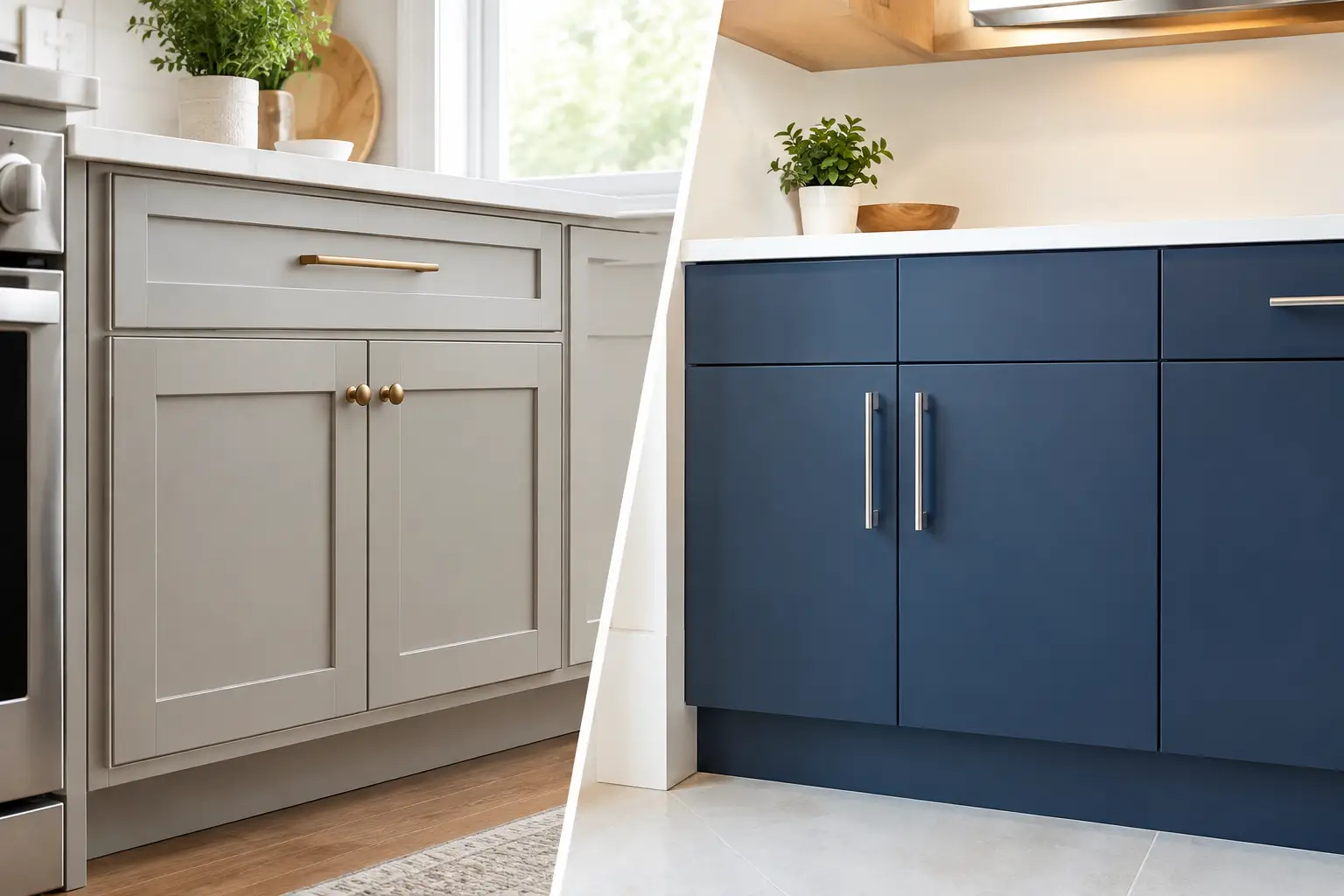
A cabinet door can change the entire character of a kitchen before anyone notices the wood species, paint color, or countertop. The central question in inset versus overlay cabinets is simple: should the door sit within the cabinet frame, or cover it? The best answer depends on the architecture of your home, the look you want to live with, and how much precision you expect from the finished work.
For a custom kitchen, this is not a small detail selected near the end of the process. Door construction influences cabinet proportions, hardware placement, reveal lines, usable interior space, and the level of craftsmanship required at every stage. Thoughtful design begins by deciding what those details should say about the room.
Inset versus overlay cabinets: the essential difference
Inset cabinetry has doors and drawer fronts that sit inside the cabinet face frame. A narrow, consistent gap – called a reveal – surrounds each door and drawer. When closed, the fronts sit flush with the face frame rather than covering it. The result is crisp, tailored, and architectural.
Overlay cabinetry places doors and drawer fronts over the cabinet face frame or cabinet box. In a full-overlay design, the doors cover most of the frame, creating broad, continuous front surfaces with very little frame visible. Partial-overlay doors cover less of the frame, leaving more structure exposed. For most new custom kitchens, full overlay is the more common overlay choice because it offers a clean, current appearance and makes efficient use of the cabinet opening.
Neither construction is inherently better. Inset reads as furniture-grade and traditional in the best sense of the word, while full overlay can feel quietly modern, transitional, or even classic depending on the door profile and finish. The details around the door determine the style more than the label alone.
Why inset cabinetry feels different
Inset cabinets are defined by discipline. Every opening must be made accurately, every door must be sized precisely, and every reveal must remain even after finishing and installation. A difference of a fraction of an inch is easy to see when the lines of a painted kitchen run from floor to ceiling.
That precision creates a distinctive visual rhythm. The face frame remains visible between doors, and the recessed fronts create depth. In a home with substantial trim, divided-light windows, a formal dining room, or a period-influenced floor plan, inset cabinetry often feels naturally at home. It can also bring warmth and structure to a newer house when paired with a simple shaker door, rift-cut white oak, or a softly painted finish.
Inset doors usually require exposed or concealed hinges designed for inset applications. Exposed butt hinges can become a beautiful part of the composition, particularly in a kitchen with aged brass, polished nickel, or dark bronze hardware. Concealed hinges offer a cleaner look without changing the inset construction itself.
There are practical considerations. Because doors fit within an opening, inset cabinetry gives up a small amount of accessible width at each cabinet. In a generous kitchen, this difference is rarely consequential. In a compact pantry, narrow base cabinet, or tightly planned vanity, it should be considered carefully. The door edges also need room to move with seasonal changes in natural wood, which is one reason properly controlled manufacturing and finishing matter.
Where overlay cabinetry earns its place
Full-overlay cabinets create a more uninterrupted field of doors and drawers. The visible gaps are smaller, the face frames are largely concealed, and the cabinetry can feel broad, streamlined, and intentional. This approach suits contemporary kitchens, but it is not limited to minimalist spaces. A full-overlay shaker kitchen in a warm white paint can be every bit as inviting as an inset kitchen.
Overlay construction offers practical flexibility, especially where storage is at a premium. The door covers the opening rather than fitting inside it, so cabinet interiors can be slightly more accessible. Full overlay also works well for large banks of drawers, integrated pantry storage, and floor-to-ceiling cabinetry where a calm, continuous appearance is desired.
It can be a wise choice when the room has several competing architectural elements. If a kitchen includes a heavily veined stone, statement lighting, open shelving, or a richly grained walnut island, full-overlay fronts can provide visual order without asking for attention. The cabinetry still carries the room, but it does so with fewer visible lines.
Partial overlay has a more traditional, familiar appearance, with face frames visibly dividing the fronts. It remains appropriate for certain styles and renovation budgets, though it does not typically provide the refined, custom-fitted appearance of inset or full-overlay cabinetry.
Cost is about precision, not just the door style
Inset cabinetry generally costs more than overlay cabinetry, but the reason is not simply that it looks more formal. It requires closer tolerances in manufacturing, more exact door and drawer fitting, careful finishing at the edges, and detailed adjustment during installation. A well-made inset kitchen is a coordinated system, not a collection of individual cabinets.
Painted inset cabinetry can be especially demanding. Paint makes shadows and gaps more visible, so reveal consistency matters throughout the room. Tall pantry doors, appliance surrounds, and paired drawer banks must be planned as a whole. A skilled cabinetmaker accounts for those relationships before materials are cut.
Overlay cabinetry is not a lesser investment. A full-overlay kitchen with well-built cabinet boxes, quality drawer hardware, durable finishing, and thoughtful internal organization can be an exceptional long-term choice. The budget is often better directed toward the features that improve daily life: deep drawers for cookware, pullout trays in a pantry, a dedicated spice cabinet, integrated recycling, or a properly designed coffee station.
The right question is not whether inset is worth more. It is whether the visible precision and architectural depth of inset are worth more to you than allocating that portion of the budget elsewhere.
Style, materials, and finish all influence the decision
Door style changes the effect of each construction method. An inset slab door can look spare and sophisticated. An inset beaded door can feel at home in a heritage-inspired kitchen. Full-overlay shaker doors offer a balanced, flexible foundation for many homes, while full-overlay flat panels emphasize a cleaner, more contemporary direction.
Material deserves equal consideration. Natural wood moves slightly with changes in humidity, and that movement must be anticipated in any cabinet construction. With inset cabinetry, the narrow perimeter reveals make those allowances more noticeable and more important. An experienced manufacturer will select appropriate materials, construct doors properly, and finish them carefully so the kitchen performs well through changing seasons.
Color also changes what the eye sees. Dark paint, black-stained oak, and high-contrast finishes emphasize reveals and hardware. Softer painted colors tend to make inset lines feel more tailored and traditional, while a clear-coated white oak full-overlay kitchen can feel relaxed and current. There is no universal formula. A sample door beside your flooring, wall color, and countertop will reveal far more than a photo viewed on a screen.
Daily use and long-term care
Both inset and overlay cabinets can serve a busy household beautifully when they are built and installed correctly. The distinction is less about durability than about expectations. Inset fronts need occasional hinge adjustment if a home experiences significant seasonal movement or settling. That is normal maintenance, not a flaw. Overlay doors may be more forgiving visually because their edges overlap the frame rather than aligning within a precise opening.
For either style, quality shows up in the places you touch every day: doors that close evenly, drawer fronts that align, hinges that remain quiet, and finishes that stand up to cooking, cleaning, and family life. Cabinetry should be designed around how you use the room, not only how it photographs on installation day.
Choosing for your home, not a showroom
If you are drawn to visible craftsmanship, furniture-like detail, and a kitchen with lasting architectural presence, inset cabinetry may be the right fit. It is particularly compelling in homes with traditional millwork or when the cabinetry is intended to feel like a permanent part of the architecture.
If you prefer cleaner planes, want to maximize usable openings, or are building around a more contemporary or transitional vision, full overlay may serve you better. It can also create an excellent canvas for more expressive materials, such as a natural walnut hood surround, a painted island, or a dramatic stone backsplash.
During a custom cabinetry consultation, bring the images that keep catching your eye, but also talk about the moments that frustrate you now. A crowded baking cabinet, an awkward corner, insufficient pantry storage, or a vanity that never stays organized can guide the design as much as a preferred door style. The most successful choice is the one that makes the room feel considered when you enter it and easier to use every day after that.